


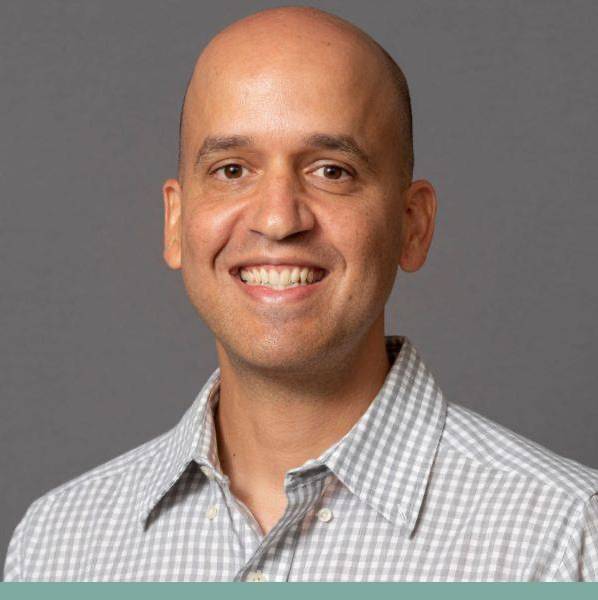
Dr. Eduardo Pérez
Professor - Ingram School of Engineering
Research Areas:
Dr. Eduardo Pérez's research interests lie in the application of operations research to service systems. He develops theories, methodologies, and algorithms to support decisions made under uncertainty and with large amounts of data. His work employs methods such as discrete-event simulation, agent-based simulation, and stochastic programming.
Background
Dr. Eduardo Pérez is a Professor of Industrial Engineering at Texas State University's Ingram School of Engineering. He is also the founder and director of the Integrated Modeling and Optimization for Service Systems (iMOSS) research laboratory. Dr. Pérez's work focuses on the application of operations research to various service systems, developing methodologies and algorithms to support decision-making in the presence of large data sets and uncertainty. His research uses techniques such as discrete-event simulation, agent-based simulation, and stochastic programming to address problems in healthcare, public health, homeland security, and humanitarian logistics.
Dr. Pérez earned his Ph.D. in Industrial and Systems Engineering from Texas A&M University in 2010 and his B.Sc. in Industrial Engineering from the Universidad de Puerto Rico in 2003. He joined Texas State University as an Assistant Professor in 2012, was promoted to Associate Professor in 2018, and became a full Professor in 2024. His professional experience also includes a postdoctoral research associate position at Texas A&M University, Visiting Scholar role at New York University's College of Global and Public Health, and Faculty Fellow for the DHS Center for Accelerating Operational Efficiency (CAOE).
About Faculty Fellows Projects
Research Impact Highlights
This project develops data-driven disaster response tools to better protect vulnerable communities during climate-related emergencies.
Disaster Planning
Using engineering and behavioral science to understand how climate disasters affect people with heart disease.
Data-Driven Models
Using interviews, data analysis, and simulations to improve disaster preparedness and response.
Community Impact
Creating practical tools to help emergency managers support at-risk communities during climate-related disasters

Featured Publication
An Agent-Based Model to Assess Interventions for Continuous Care of Cardiovascular Diseases After Natural Disasters