


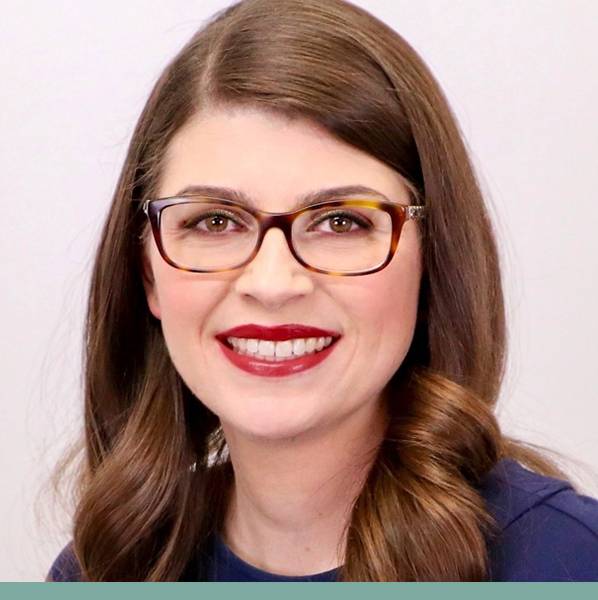
Elizabeth Ekren, Ph.D
Research Associate - Translational Health Research Center
Research Areas:
Social and non-medical determinants of health; place-based health disparities; individual and community resilience; multilevel socioecological frameworks; development studies; mixed methods approaches
Background
Dr. Elizabeth Ekren is a researcher with the Translational Health Research Center whose work focuses on place-based health inequities and community-engaged applied research. Her scholarship sits at the intersection of medical sociology and health services research, with particular emphasis on how social, geographic, structural, and institutional conditions shape access to resources and health outcomes. Dr. Ekren has built a strong interdisciplinary and externally engaged research portfolio through collaborations spanning public health, family medicine, psychology, epidemiology, economics, engineering, social work, and computer science.
Her work draws on qualitative, community-engaged approaches and quantitative population health analytics to examine topics such as rural-urban health disparities, disaster recovery trajectories, and the function of community health systems. Across this work, she is committed to producing research that informs practice, strengthens local health systems, and improves health outcomes, particularly in vulnerable and under-resourced communities. Dr. Ekren received her Ph.D. in Development Studies from the University of Bonn, Germany. She received her Master’s of Science degree in Russian and East European Studies from the University of Oxford, United Kingdom. She received dual Bachelor of Arts degrees in Psychology and Russian Language from Yale University.
About Faculty Fellows Projects
Dr. Elizabeth K. Eger is collaborating with librarians and communities across Texas to identify local needs for rural community resilience, public health resources, and workforce development. Dr. Eger uses a community collaboration approach to implement COPEWELL (Composite of Post-Event Well-Being), a framework for community resiliency developed by Johns Hopkins University. Her project positions librarians as community conveners and leaders for rural community resilience planning. To date, Dr. Eger has collaborated with two rural Texas communities where the project was highly embraced and the impacts are evident. Her work leverages a partnership with the Texas State Library and Archives Commission to inform future program development and resiliency resources for Texas communities.
Research Impact Highlights
Key metrics showing impact in volunteer resilience, disaster response research, and mental health advocacy.
Identifying Barriers
Identifying barriers to care to improve rural health access, support systems, and community-centered services.
Health Disaster Models
Develops engineering-based disaster models that integrate behavior, social factors, & health data to improve emergency response for vulnerable groups.
Volunteer Resilience
Documents flood-response volunteers’ experiences to understand coping, resilience, and long-term well-being after traumatic disaster recovery work.
Featured Publication
Mental Health and Individual Resilience in Contexts of Social Vulnerability: Evidence from Rural Texas Community Mental Health Journal May 09, 2026