

The RightSite, Right Away
OCTOBER 27, 2026
The Translational Health Research Center (THRC) at Texas State University visited RightSite Health on Oct. 27 to see how the company helps 911 callers with low-acuity, or non-emergent, medical needs get the right care. The THRC team toured the company's call center and watched staff guide eligible callers through their care options in real time.
The question behind the visit matters to patients and to emergency medical services (EMS). Can a clinician's assessment, plus help arranging follow-up care, get people to the right level of care while keeping ambulances free for emergencies?
Demand is rising. Texas Department of State Health Services data show that EMS agencies reported about 2.79 million runs from 911 calls in 2019 and 3.29 million in 2022, an increase of 18%. A 2026 report from ImageTrend, an EMS software company, found that nearly 60% of 911 responses in its national dataset for 2023 to 2025 were classified as low acuity.
But that label alone does not show whether a patient can safely do without an ambulance ride or a trip to the emergency department. That is why clinical assessment, care navigation, and follow-up need evaluation.
RightSite Health steps in after a call has been identified by 911 or EMS as low acuity. At that point, the call can be transferred to RightSite, or medics on scene can activate RightSite via phone or tablet. An emergency clinician then assesses whether the patient can safely get care in another setting. RightSite's Social Care Navigators help patients with clinical and practical barriers to follow-up care. The emergency department always remains an option, and EMS can send an ambulance or transport the patient at any time, for any reason.
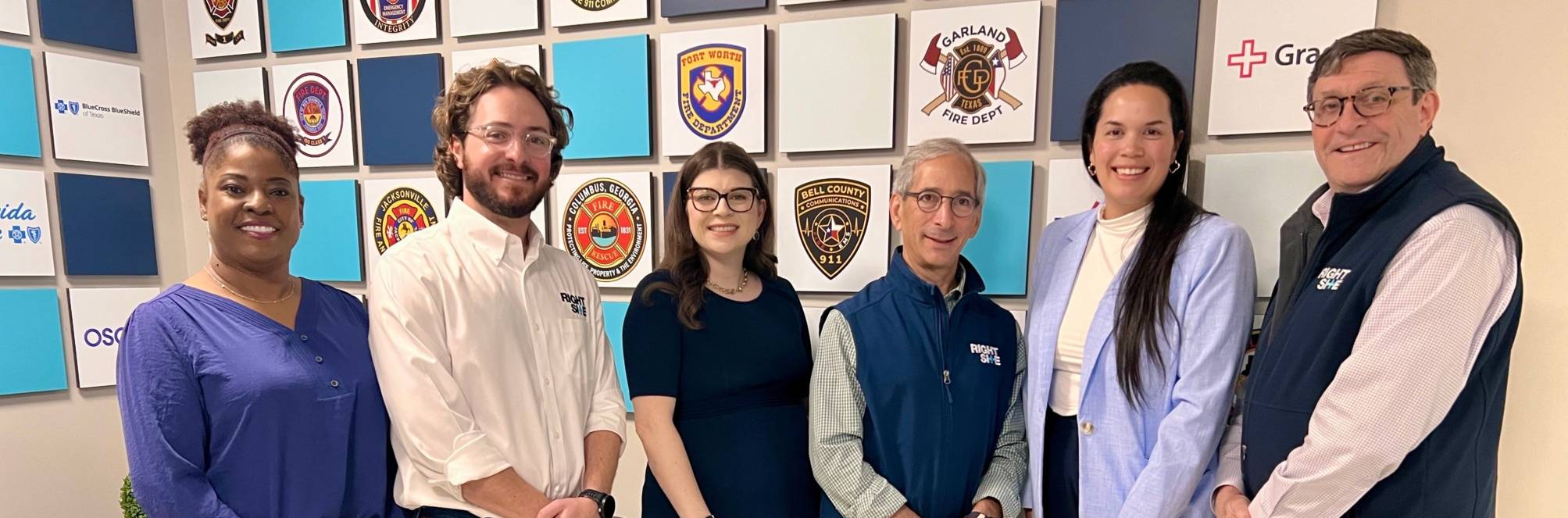
RightSite Health CEO Jamo Rubin, M.D.; Chief Financial Officer Michael Boxer; and JJ Rubin, Director of Brand Strategy and Marketing, hosted the visit. The THRC visitors were Marsha Burney, Director of Community Relations; Carolyn Chang, Director of Bioscience Education and Training Research; and Elizabeth Ekren, Research Associate.
"People call 911 because it is the one number that always answers," said Jamo Rubin. "Our job is to help each caller get to the right care, safely, and to help keep ambulances available for emergencies."
The visit opened exploratory discussions about how THRC research could help evaluate the model. Potential areas of study include patient outcomes and experiences, timely access to follow-up care, health care utilization, EMS availability, and workforce demands. Future evaluation could also examine how the model is implemented and what conditions support its use across different communities.
These discussions reflect THRC's interest in connecting research with practical questions about how health care is delivered and how new approaches can meet patient and community needs.