


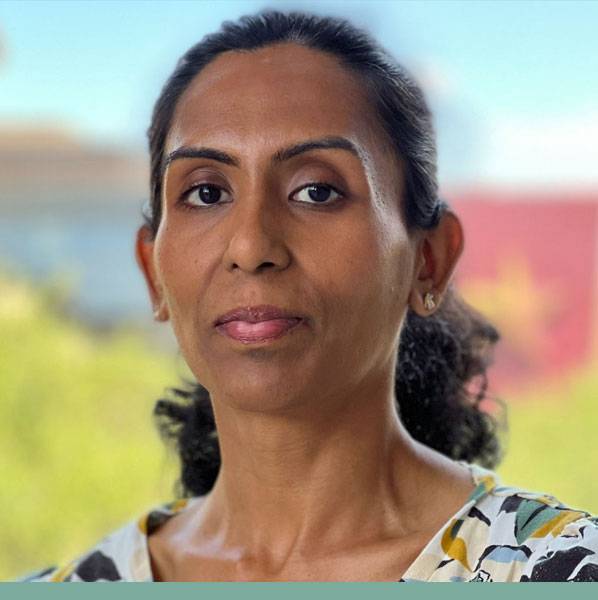
Dr. Ishitha Kumar
Assistant Professor - Finance & Economics
Research Areas:
Financial intermediation, FinTech, regulation, and labor markets, applied econometric methods, data engineering for large datasets, and translating research insights into policy-relevant and pedagogical applications.
Background
Dr. Ishitha Kumar is an Assistant Professor in the Department of Finance and Economics at Texas State University and a THRC Faculty Fellow for 2026–2027. She received her Ph.D. in Finance from Emory University’s Goizueta Business School in 2024. Her research examines how economic shocks, institutions, and technological change affect workers, households, firms, and local communities. Before moving into finance, she trained as an engineer. She holds a Ph.D. in Aerospace Engineering from the Indian Institute of Technology Madras and has published research in combustion science and holds a patent in propellant chemistry. That background continues to shape how she approaches research and measurement: when the data needed to answer a question do not exist in a usable form, she often builds them. A central part of her current work examines the connection between economic disruption and community well-being. Job loss and prolonged unemployment can affect physical and mental health, and in the United States employment is often closely tied to health insurance. Understanding how quickly, and how evenly, employer demand returns after a disaster can therefore provide insight into which communities regain stable employment, income, and access to health coverage, and which face a longer recovery.
About Faculty Fellows Projects
Understanding Workforce Recovery After Natural Disasters
Natural disasters can disrupt local businesses, employment, and hiring long after the immediate emergency has passed. Dr. Kumar’s Faculty Fellow project studies how local labor markets respond and recover after major weather events. The project uses detailed labor-market data, including employer job postings, to examine changes in hiring demand following disasters. It tracks outcomes such as the number of jobs advertised, the employers that are hiring, occupations and skills in demand, advertised wages, and how long positions remain open. The research asks: How quickly does employer demand recover? Which industries and occupations recover first? Do employers look for different workers or skills after a disaster? Do some communities experience longer labor-market disruptions than others? The goal is to produce evidence that is useful not only to researchers, but also to workforce organizations, economic-development groups, employers, local governments, and communities planning for disaster recovery.
Research Impact Highlights
Community Impact
Public-Facing Research
Natural Disasters Impact
Featured & Public-Facing Research
Flood Recovery and Labor-Market Dashboard - In Development
A public-facing dashboard tracking employer hiring and workforce demand in Hays and Caldwell Counties following the 2025 Central Texas floods. Planned measures include job postings over time, industries and occupations, advertised wages, the number of employers hiring, and geographic differences in recovery.
Explore Dr. Kumar’s research and publications: Research Website
Public Research Dataset
Kumar, I. (2026). Natural Disasters and Local Labor Market Dynamics: County-Quarter QWI–NOAA–FEMA Research Dataset. Texas State University Dataverse. https://doi.org/10.18738/T8/OCZ1JK
A county-by-quarter panel spanning 2005–2025, roughly 157,000 observations, linking public-use Quarterly Workforce Indicators to NOAA storm-event records, damage measures, and FEMA assistance data. Constructed, documented, and publicly released so that other researchers, agencies, and community organizations can study disaster recovery without rebuilding the underlying infrastructure.
Selected Publications
Kumar, I., Flynn, M. J., & Shankar Menon, A. (2026). Banking access and crypto participation: Evidence from India’s crypto ban. Finance Research Letters.
Kumar, I. (2025). Evolution of the financial advisory market with the advent of robo-advisors. Managerial Finance, 51(5), 831–856.
Selected Work in Progress
Natural Disasters and Labor Market Dynamics
Credit Unions and Local Economic Resilience during COVID-19
Natural Disasters, Market Imbalances, and Advisor Misconduct
Automation and High-Skill Labor Markets: Evidence from Robo-Advisors (with Matt Flynn) — under review
Misconduct and Dispute Resolution in Financial Advisory Markets (with Ivilina Popova)